
Poured and finished by hand
Epoxy tables and resin river tables, made in South Africa
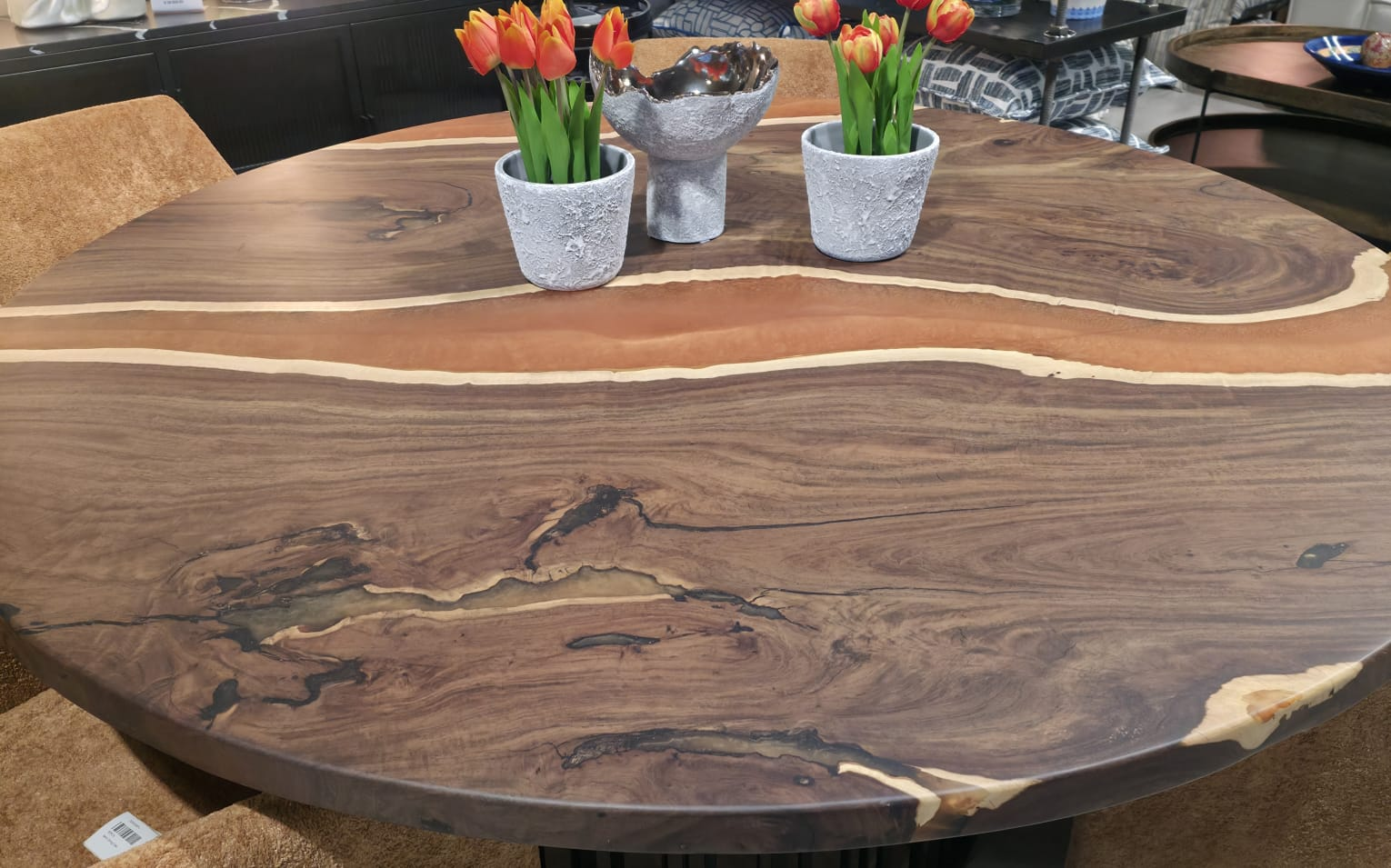
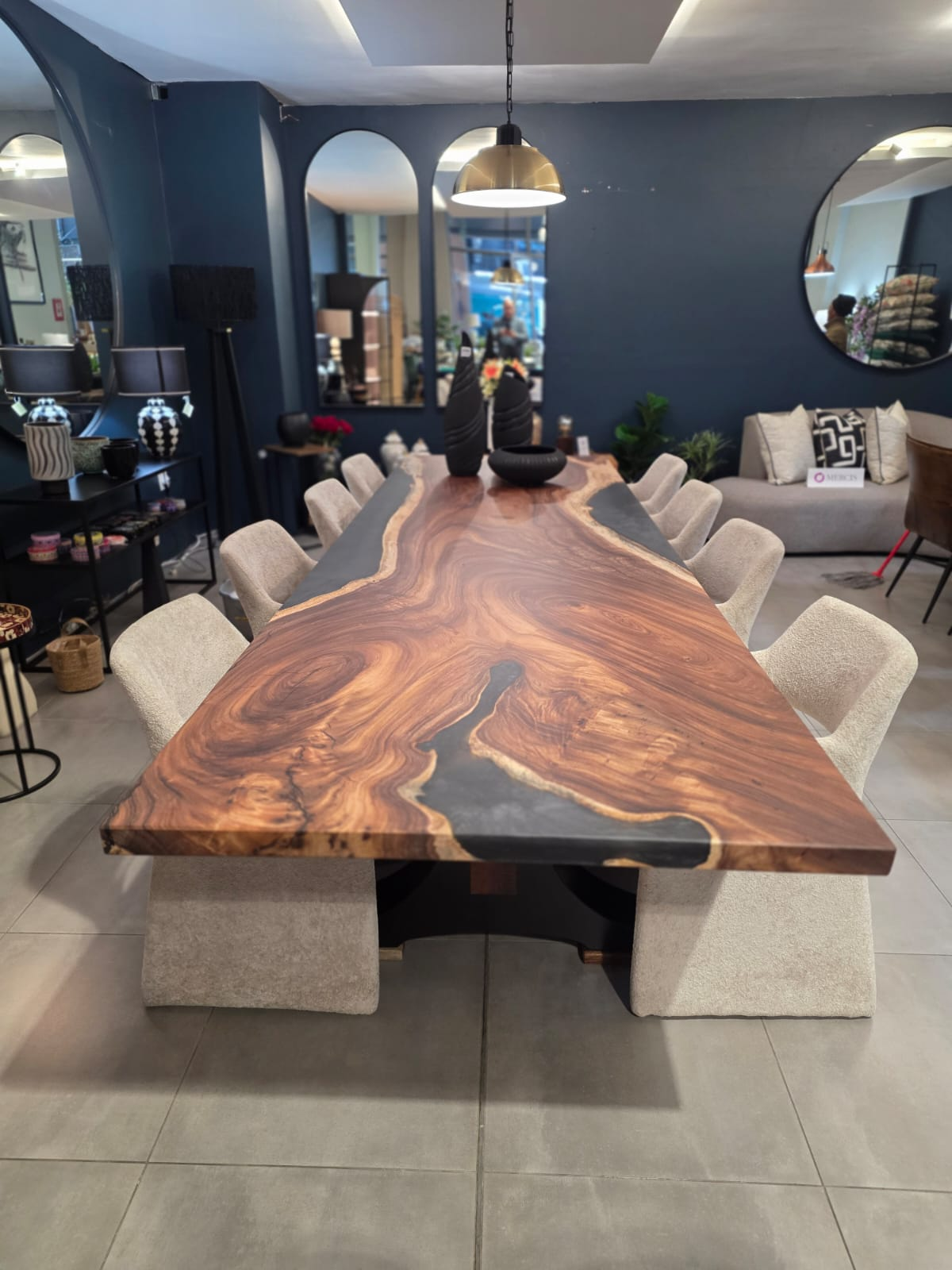
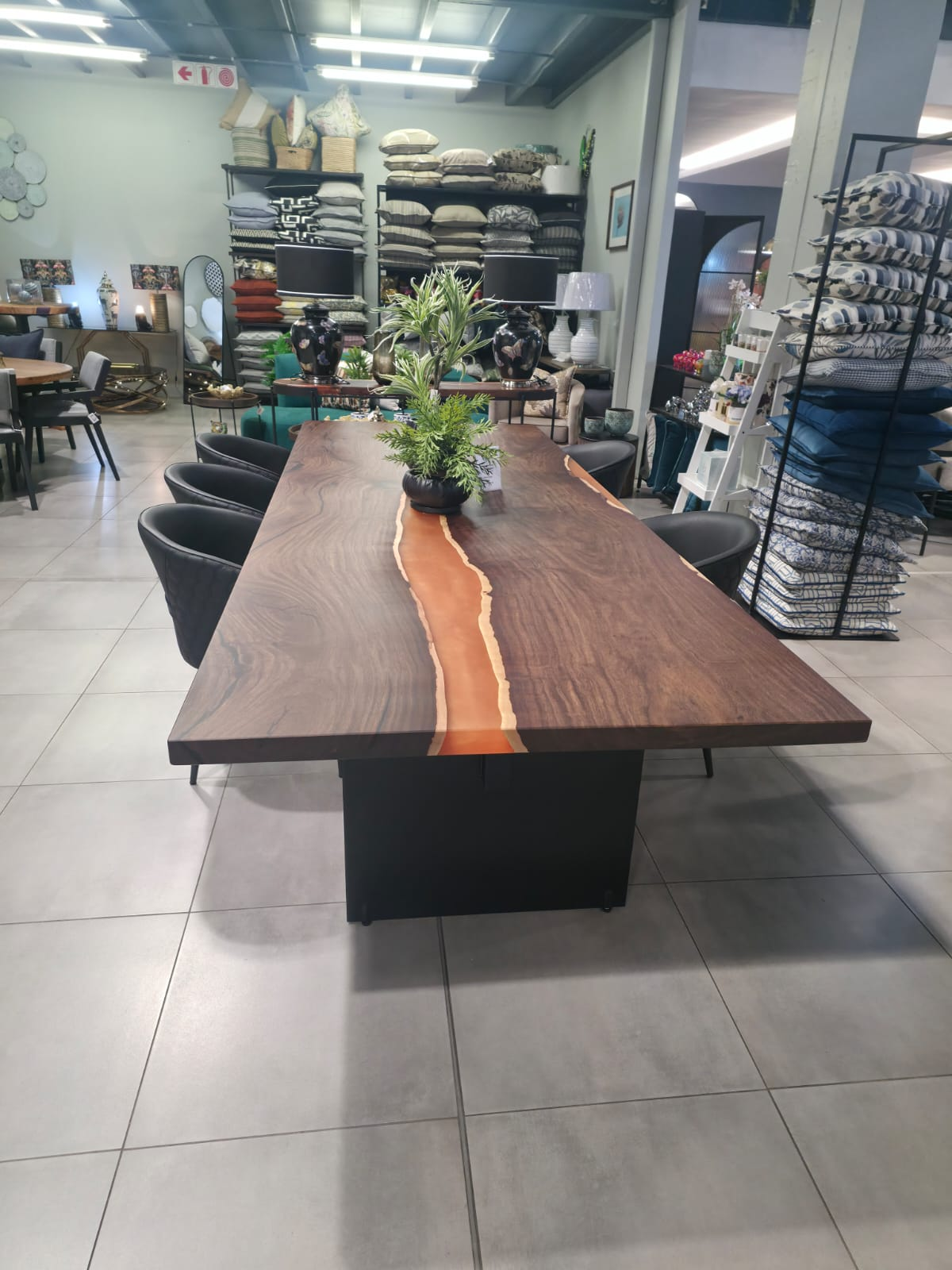
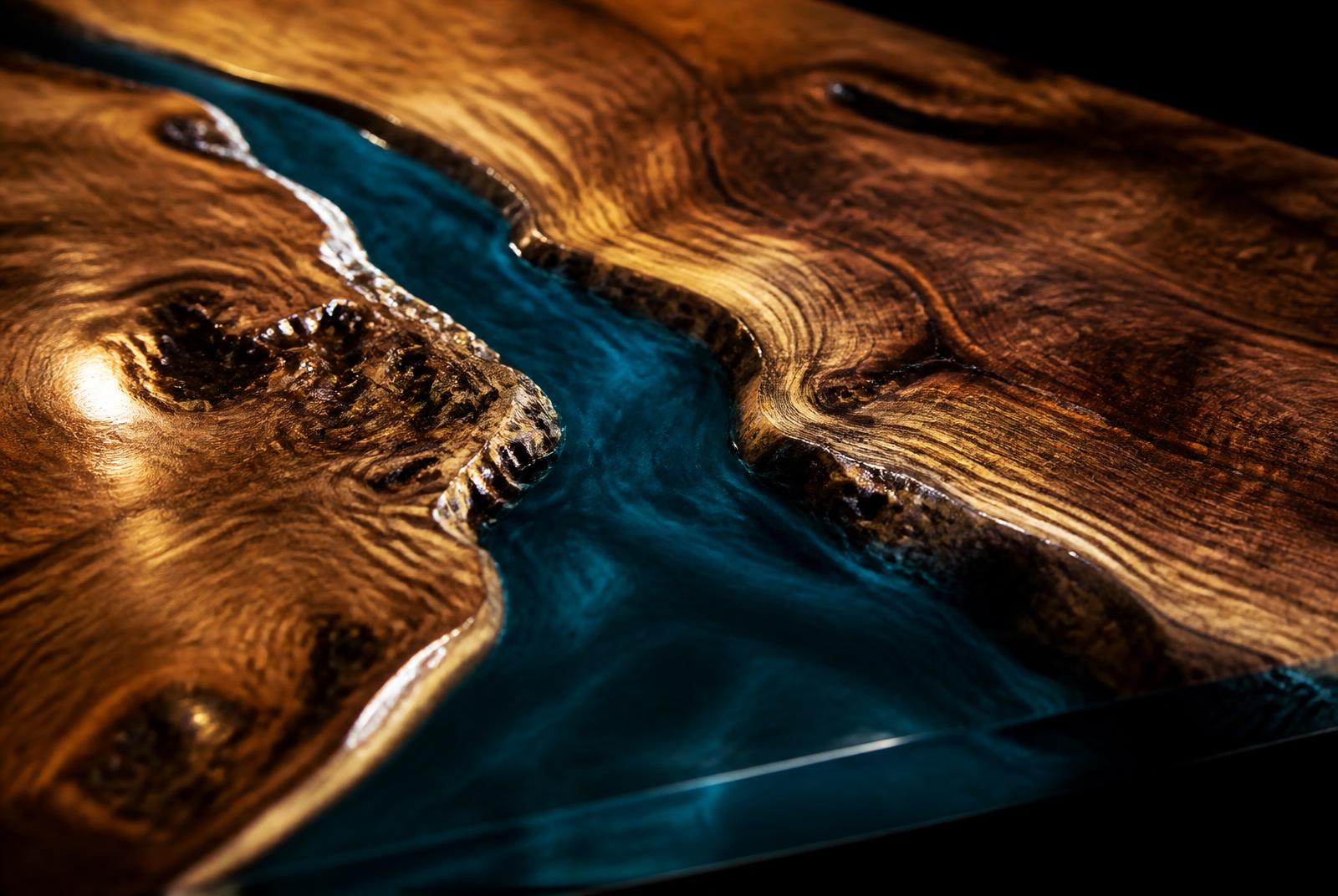
A river table is a single timber slab, split or live-edged, with a channel of epoxy resin poured between the two halves. We select the slab, pour the resin in the colour you choose, then level, sand and finish the top by hand in our own Johannesburg factory.
People call these tables different things: an epoxy table, an epoxy river table, a resin table, a wood and resin table, a live-edge table, or in Afrikaans an epoksie tafel. They are all the same piece, and we make all of them to order.
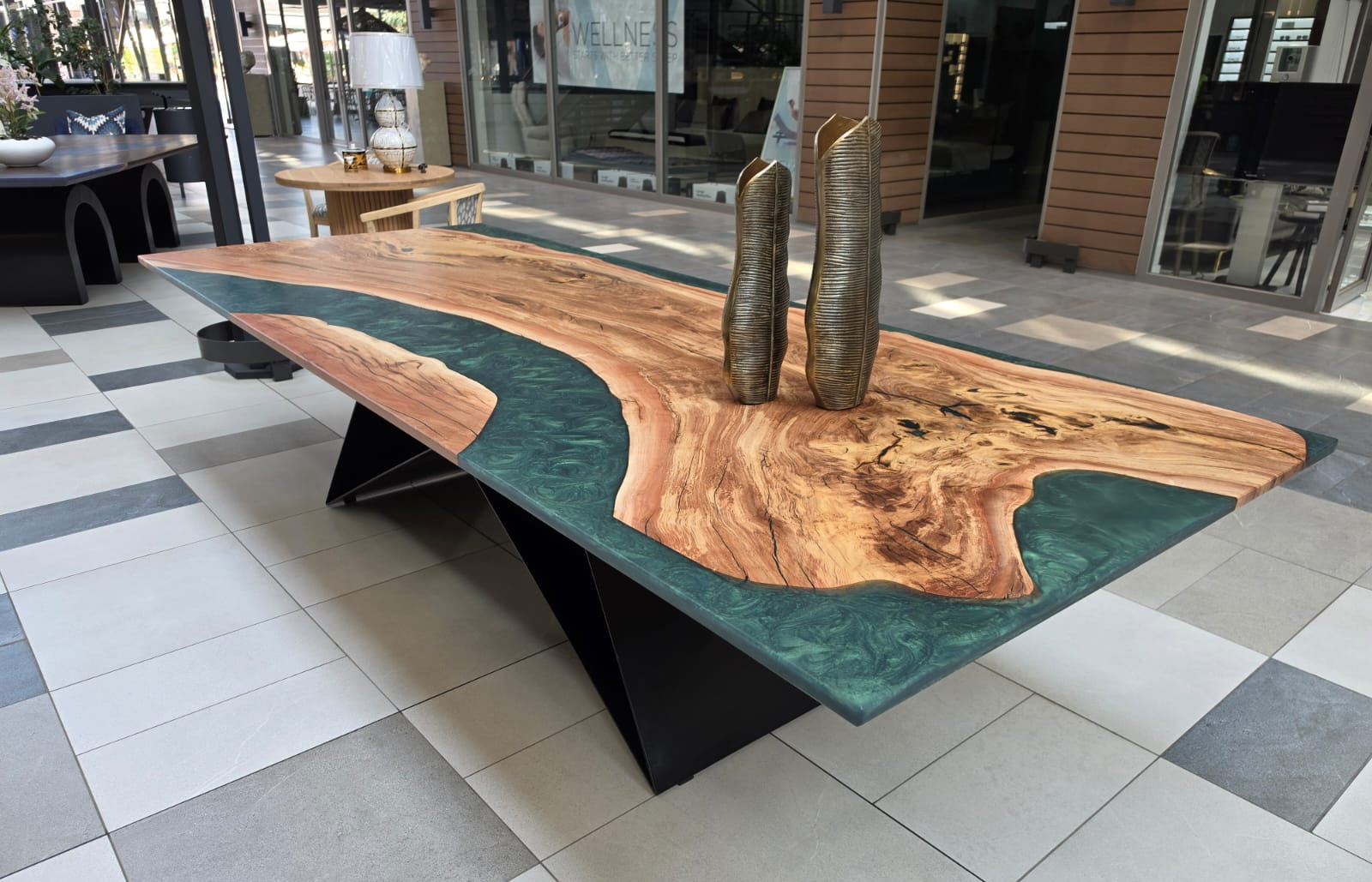
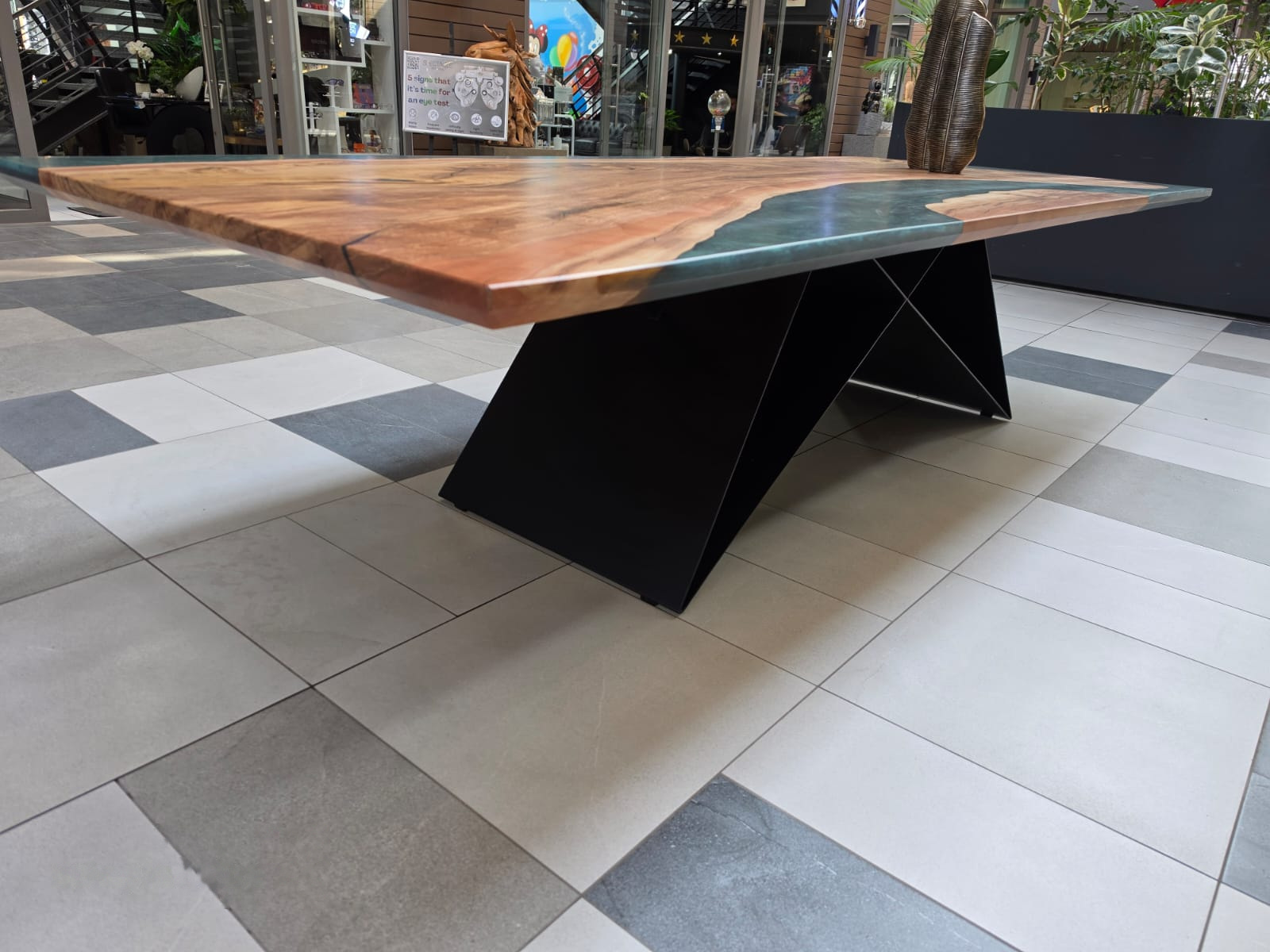
The best wood for an epoxy river table in South Africa
The resin is only as good as the timber around it. Pick a wood that barely moves, so it never pulls away from the cured pour in a dry Highveld winter: Kiaat and American White Oak are the safest choices, American Black Walnut the most dramatic. Oily timbers such as Tamboti resist epoxy, so we seal them first or leave the resin out. Every slab is dried below 10% moisture before anything is poured.
- Matumi
- Golden brown with a fine, flowing grain. Our most requested river slab.
- Leadwood
- Very dense and dark. Heavy, formal, and it takes a deep polish.
- Kiaat
- Warm red-brown with strong figure — the South African classic.
- Chamfuti
- Rich chocolate tones, often with dramatic live edges.
- Reclaimed timber
- Character marks and old nail holes kept, filled with clear resin.
Compare all twelve timbers in our timber guide — colour, hardness, movement, slab sizes and how each behaves with resin.
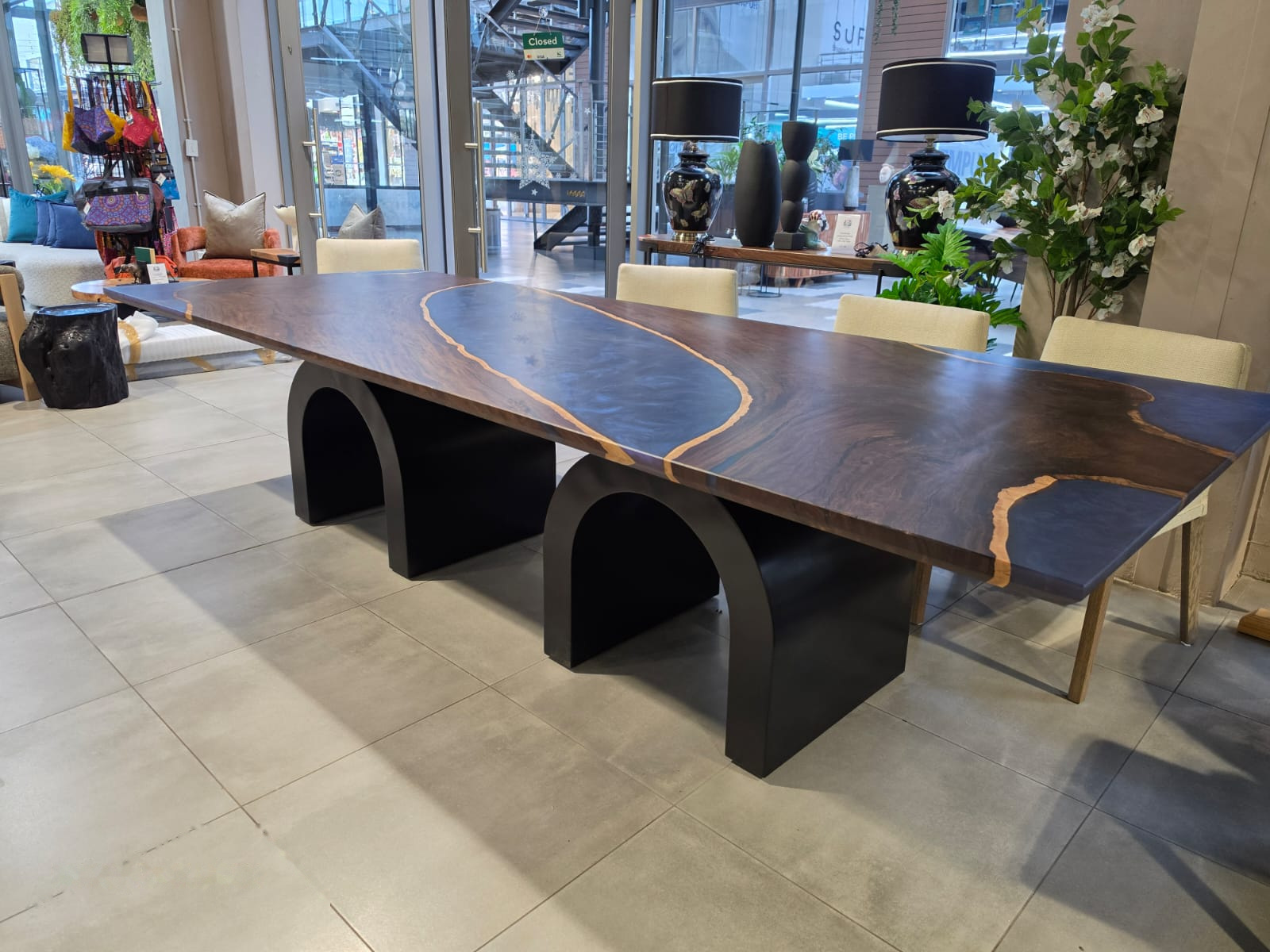
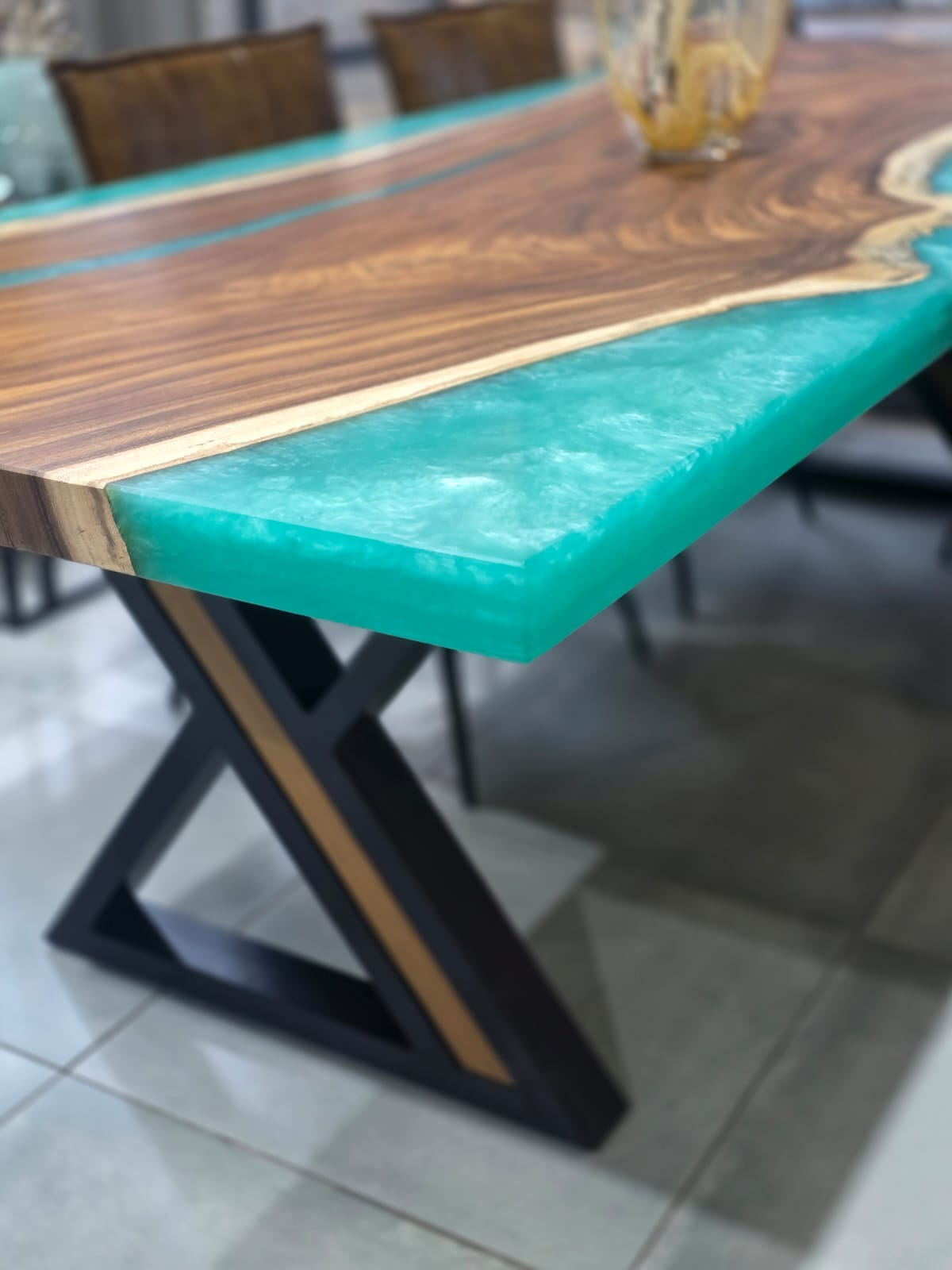
One slab, not two boards
Most epoxy river tables are made by running resin between two narrower boards. We split one wide slab and rejoin it with the pour, so the grain and the live edge mirror across the river and the top reads as a single piece of timber.
More on how the two methods differ in the questions and answers.
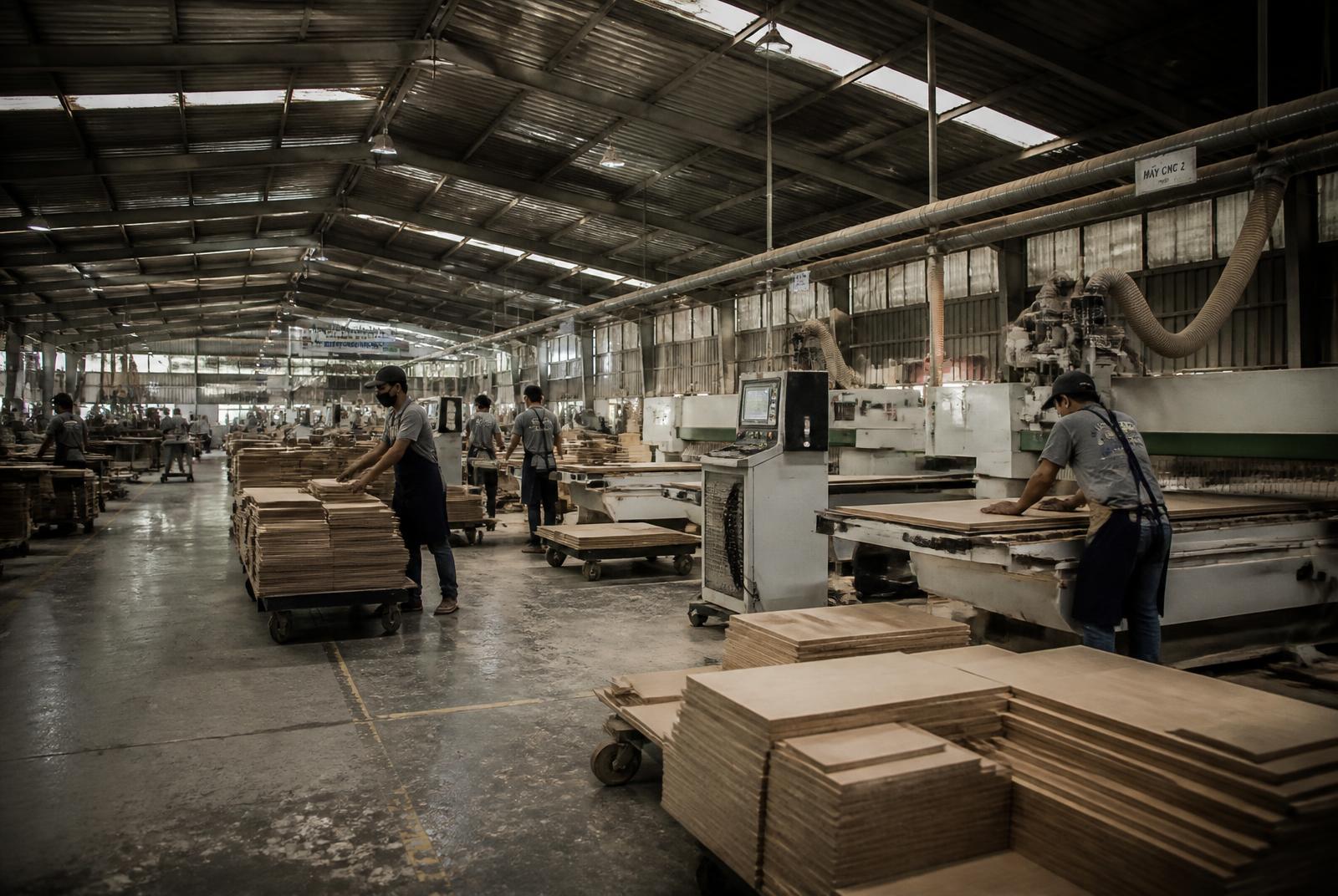
In the workshop
Where the slab becomes a table
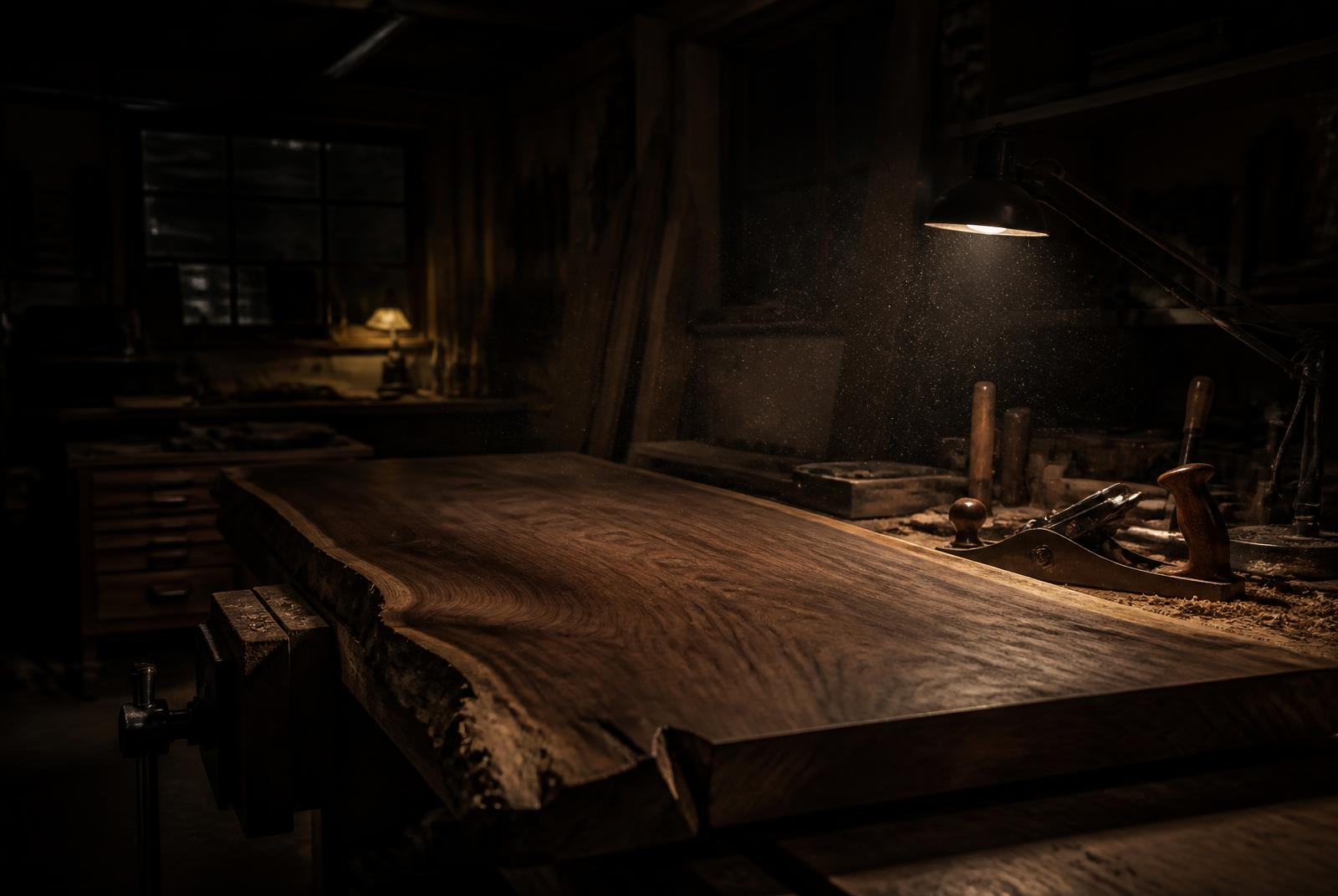
Everything happens under our own roof: the slab is selected and cut, the river is poured in layers and left to cure, then the top is levelled, hand-sanded and finished.
Every table is one of one
A slab is never repeated. The grain, the pour and the base are made for that one table, and the design retires with the piece — we do not build a second to the same drawing.
Every commissioned table is entered in our build register and carries a small code plate under the top. Scanning it opens that table's own build record: the serial, the timber and its origin, the resin colour, who built it and when, and the maker's notes from the workshop. The record is private — it is not listed anywhere on this site and cannot be found by search. It belongs to whoever owns the table.
The table is handed over with a printed, numbered certificate of authenticity carrying the same serial and code, signed by the workshop — the way a numbered artwork is documented.
Resin colours
- Clear
- Shows the live edge through the channel. The most natural look.
- Emerald
- Deep green against golden timber. High contrast.
- Aqua and teal
- The classic river look, reads as water under light.
- Smoke and charcoal
- Quiet and modern, suits dark timbers.
- Metallic pearl
- A pigment shift that moves as you walk past the table.
Bring a fabric, a paint swatch or a photograph of the room and we match the pour to it.
What to expect
- Lead time
- Eight to twelve weeks for a resin pour — the resin must cure before finishing.
- Sizes
- Made to your room. Common lengths run 1 600 mm to 3 000 mm.
- Indicative price
- From R80 000; length, slab and depth of pour move the figure. Every piece is quoted in writing.
- Delivery
- R1 350 per order in Gauteng; quoted per job elsewhere in South Africa.
Every slab is different, so no two river tables are the same. We photograph the actual slab before work starts. Browse finished pieces in furniture, read how a piece is made, or check the questions and answers. Outside South Africa? We deliver to Namibia, Zimbabwe and Botswana.
Questions about epoxy and resin tables
- What is the best wood for an epoxy river table in South Africa?
- For reliability, Kiaat or American White Oak: both move very little, so the timber does not pull away from the cured resin through a dry Highveld winter. For drama, American Black Walnut or a wide Matumi or Chamfuti slab with a strong live edge. Avoid oily timbers such as Tamboti, which resist epoxy. Whatever the species, the slab must be dried below 10% moisture before the pour, or the bond will fail. Our timber guide compares all twelve woods we work with.
- What is the difference between a one-slab river table and one made from two boards?
- Most epoxy river tables are made by taking two narrower boards and running a resin channel between them. We work the other way: one wide slab is split and rejoined with the pour, so the grain and the live edge mirror each other across the river and the top reads as one piece of timber. Both methods make a river table; a single slab is simply the harder and rarer of the two to find and to work.
- Why does a single-slab river table cost more?
- Wide old-growth slabs are scarce, they have to be air-dried and stabilised before anything can be cut, and one wrong cut ends the piece — there is no second board to fall back on. That is why a resin river table starts at R80 000 while a made-to-length solid-timber dining table starts far lower. Every piece is quoted in writing before work begins.
- Is an epoxy table the same as a resin river table?
- Yes. An epoxy table, an epoxy river table, a resin table, a wood-and-resin table, a live-edge table and in Afrikaans an epoksie tafel all describe the same piece: solid timber with a hand-poured epoxy channel or fill. We make all of them to order in our Johannesburg factory, in the length, timber and resin colour you choose.
- How thick is the top, and will the resin crack or yellow?
- Tops are made from full-thickness slabs, and the resin is poured in controlled layers so it cures right through rather than trapping heat. Once cured it is levelled, sanded and finished by hand with the timber, so the surface is one continuous plane. Keep it out of permanent direct sun, as with any timber piece, and clean it with a soft damp cloth rather than solvents.
- Can I see the actual slab before you cut it?
- Yes. We photograph the exact slab before any work starts, so you approve the timber that becomes your table rather than a photograph of somebody else's. The slab is never repeated, and the finished piece is entered in our build register with a numbered certificate.
- Do you deliver a river table outside Gauteng?
- Yes. Delivery in Gauteng is R1 350 per order; elsewhere in South Africa it is quoted per job, based on the size of the piece and the distance. We also deliver to Namibia, Zimbabwe and Botswana, quoted per job, with duties and clearing for the buyer's account.
Ask for a written quote
Tell us the length you need and the colour you have in mind. We come back with a price and a lead time.